Lovers of Lucite
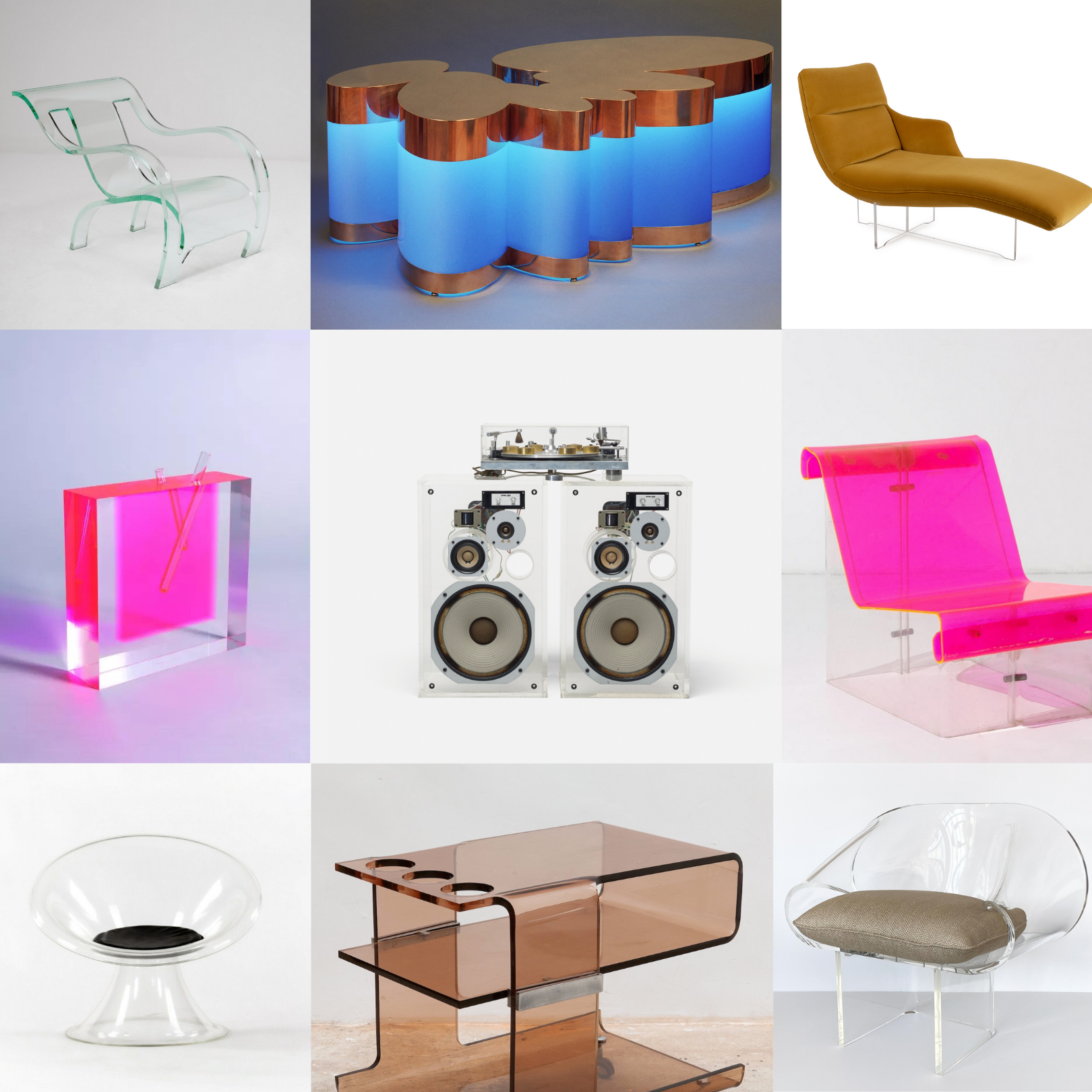
Lucite, also known as Acrylic or Plexiglas, is made of the synthetic polymer polymethyl methacrylate- developed in 1928. Although it wasn’t until the 1960s and 1970s that it became popular.
Lucite is the brand name of the polymer developed by DuPont and Plexiglas is the brand name of the Rohm & Haas polymer. Each manufacturer refers to it by it’s own trade name. other names include polycast, perspex, acreylex, acrylite, among others.
The material made a splash at the 1939 world fair in New York but after world war II, the clear acrylics were reserved strictly for military use only. the fact that the material was light while also shatter-resistant and cheap to produce all lead to the material being an essential and practical use for submarine periscopes and aircraft windshields.
After the war, designers in various industries began experimenting with the material. From furniture designers to jewelry and handbag designers- each were looking to implement the material into their latest creations. Soon interior designers were putting lucite and acrylic pieces in homes in Paris, Hollywood and New York. To this day, vintage lucite designs are highly-sought after. Let’s take a look at some of our favorite pieces made of the material.
Some of our favorite lucite designs
ÉLYSÉE BOOKCASE BY PIERRE PAULIN, 1971


J.A. Michell Engineering Ltd., Reference Hydraulic Transcription Turntable, United Kingdom, c. 1965


Neal Small Acrylic/Lucite lounge chair, 1970s

Vladimir Kagan custom three-piece sofa, 1968
Michel Dumas SMOKED LUCITE AND CHROME SHELF, 1970S
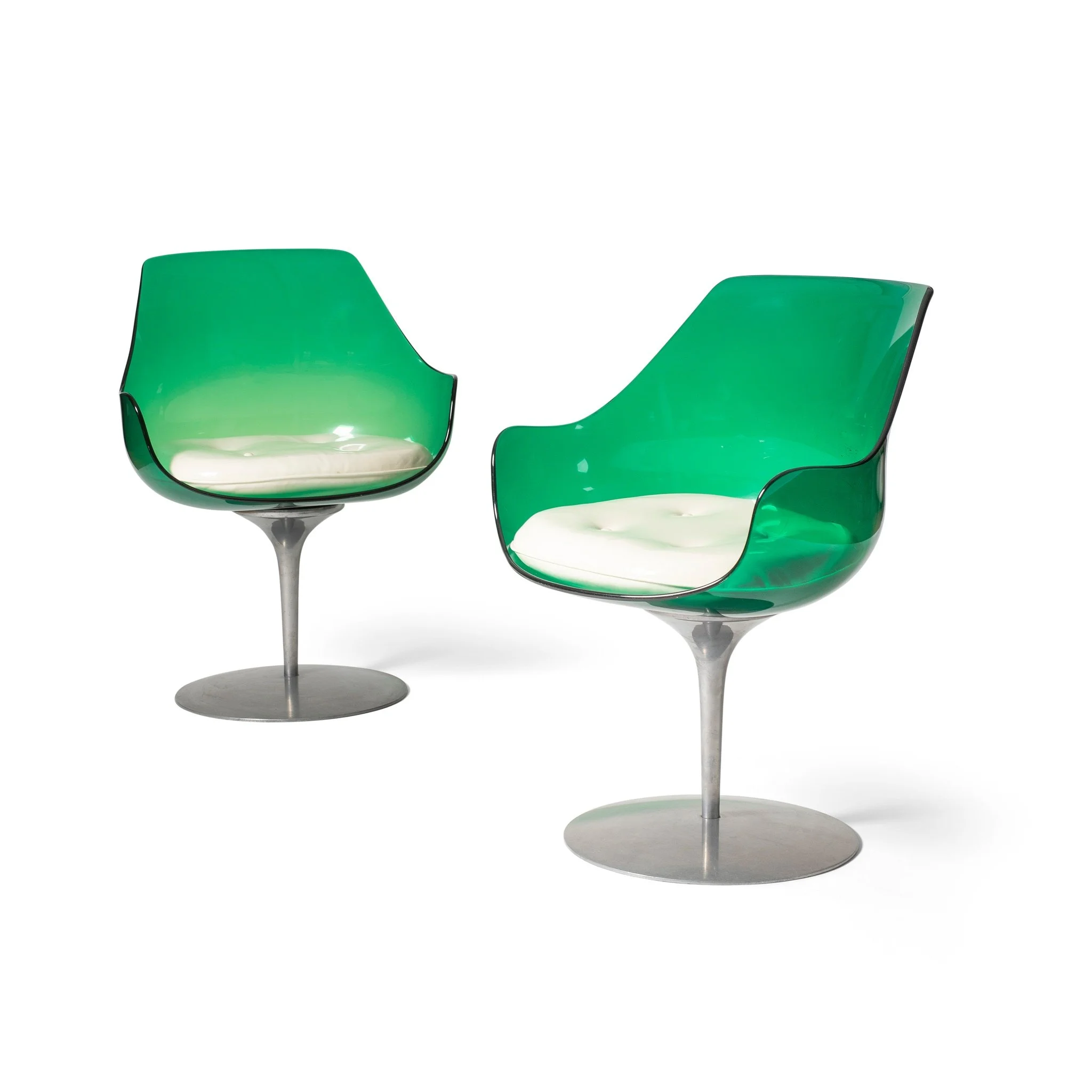
LUCITE GERALD SUMMERS CHAIR, 1970S

LUCITE BAR CART BY MICHEL DUMAS FOR ROCHE BOBOIS, FRANCE 1970S


Vladimir Kagan, Pair of Lucite Lounge Chairs, USA, c. 1970’s
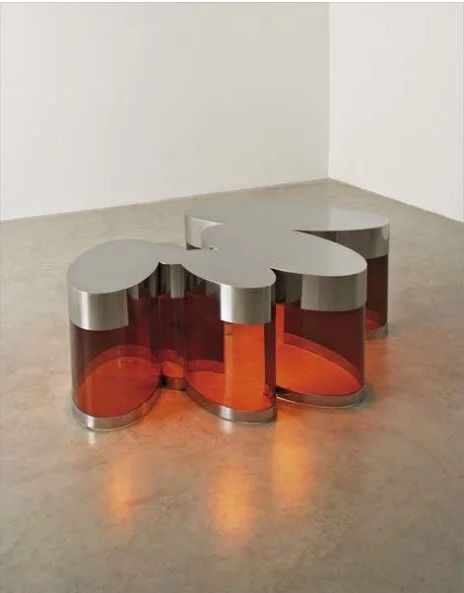

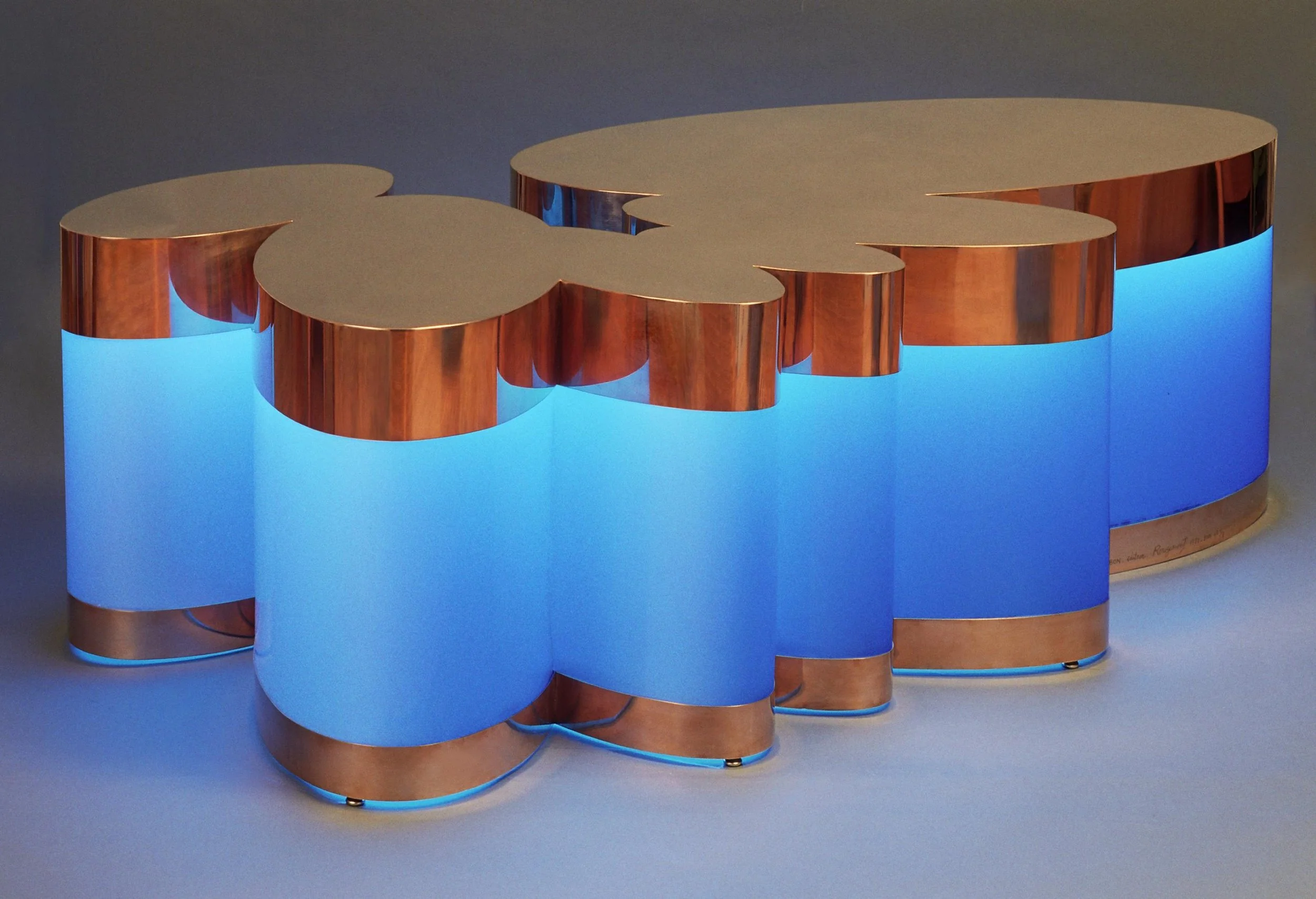


Guy De Rougemont ‘Nuage’ coffee table, 1970s


Robert Van Horn Lucite Ribbon Lounge Chair, Signed, 1970s
VINTAGE 1970'S TABLE LAMP BY ROMEO REGA WIT A LUCITE SHADE & BRASS DETAILS

Ettore Sottsass, ‘Teodora’ chair, Vitra Editions, Italy, 1986-87


Vladimir Kagan Boomerang Desk and Return, 1970s
Charles Hollis Jones ‘Le Dome’ Dining Table, 1970s
Jacques Charpentier, Lucite and Suede Lounge Chair, 1970


Enzo Mari Lucite Sculpture, 1960s


1970s White Acrylic Desk with Smoked Lucite
Rare Michel Pigneres Lucite and Nickel Cocktail Table or Dry Bar, France, 1969


Michel Dumas nesting tables, 1970s


Vladimir Kagan Roll Top Writing Desk, 1960s
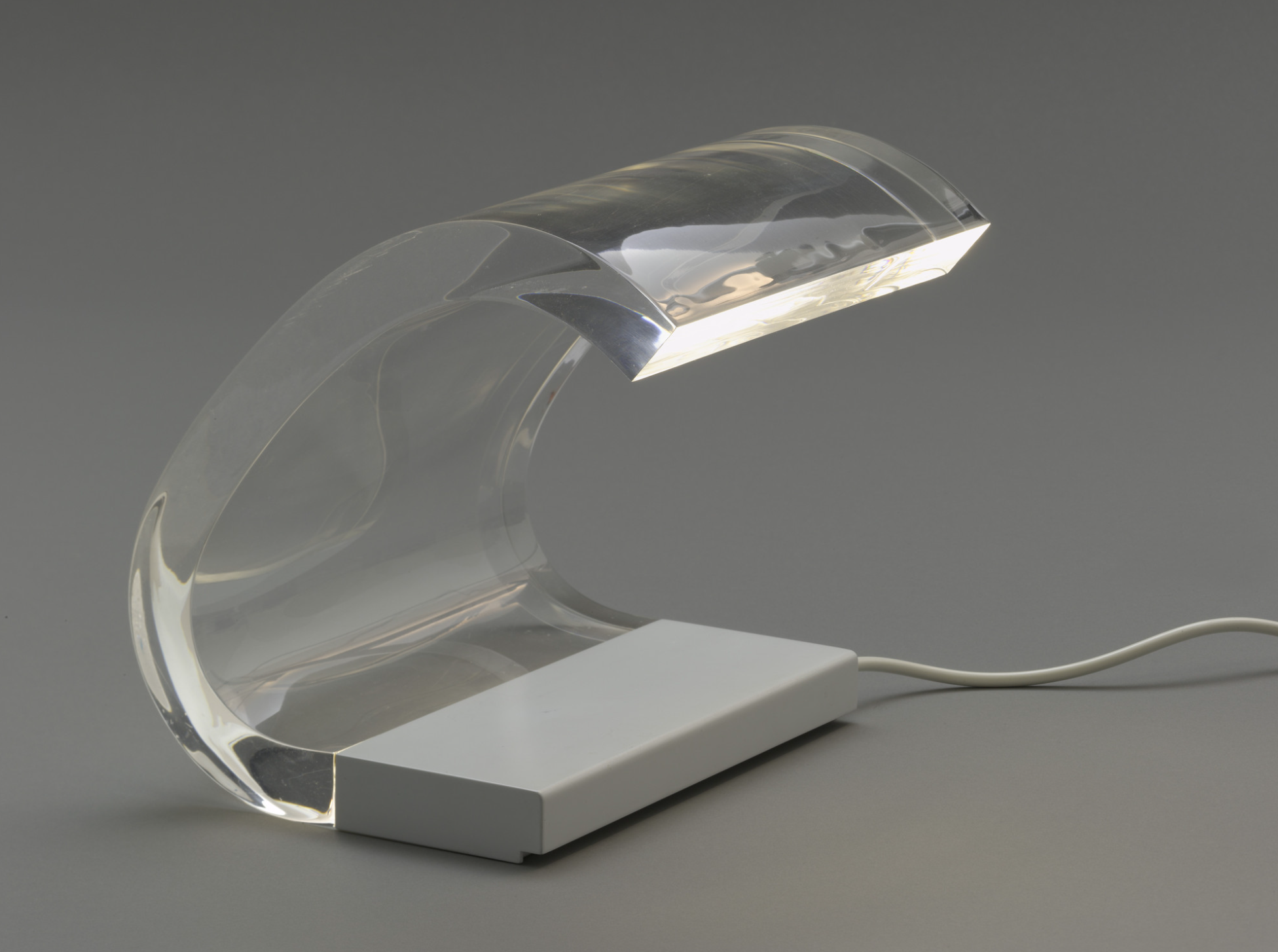
Joe Colombo, 281 ‘Acrilica’ Table Lamp, 1962

Ships from: Sarasota, Florida
Priced for the pair. Contact us if you would like to purchase individually.
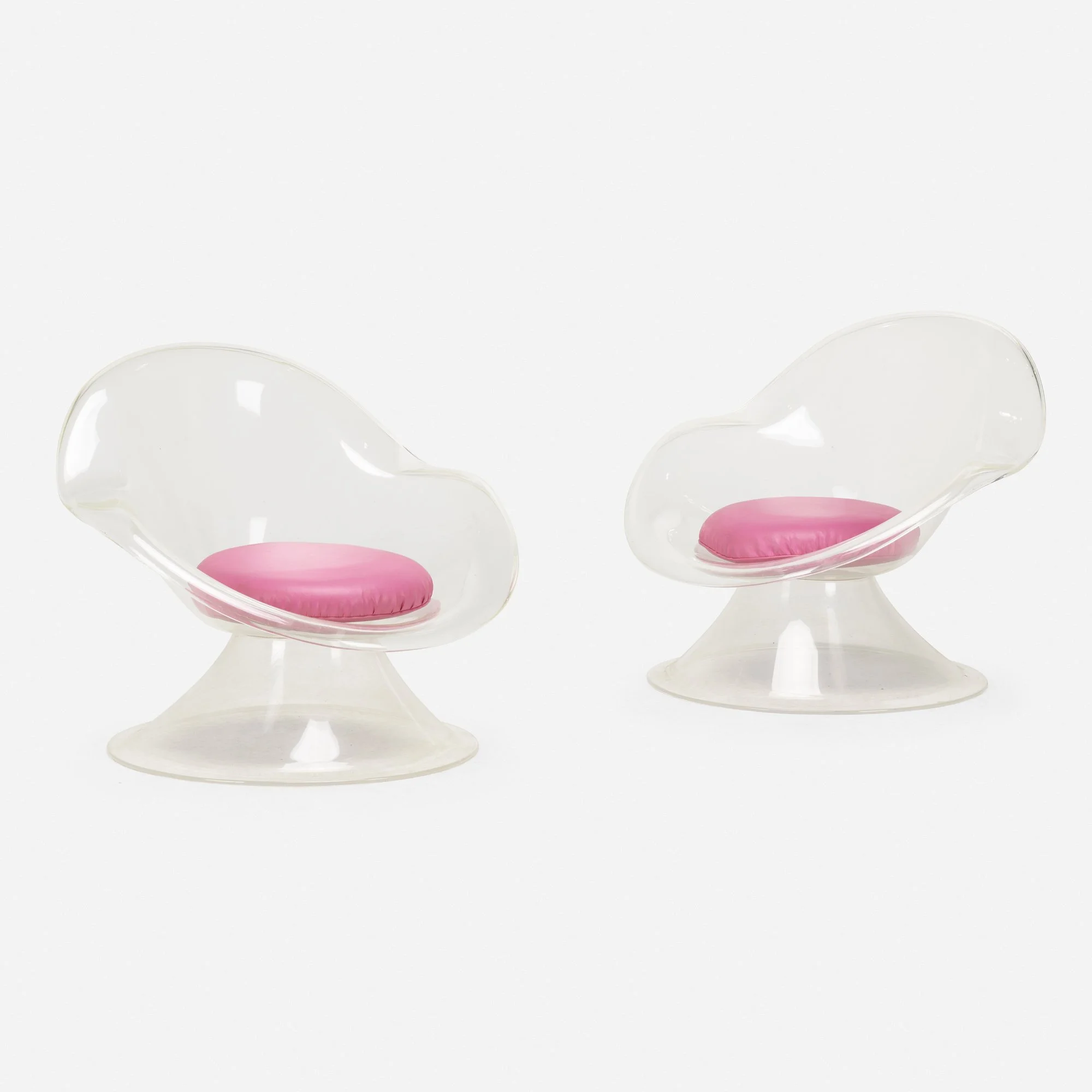
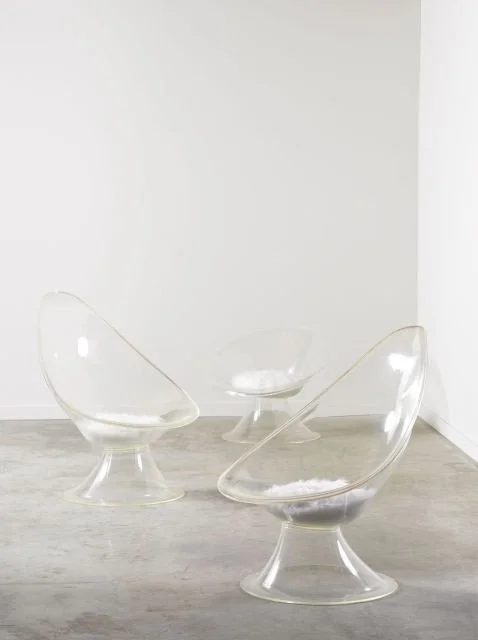
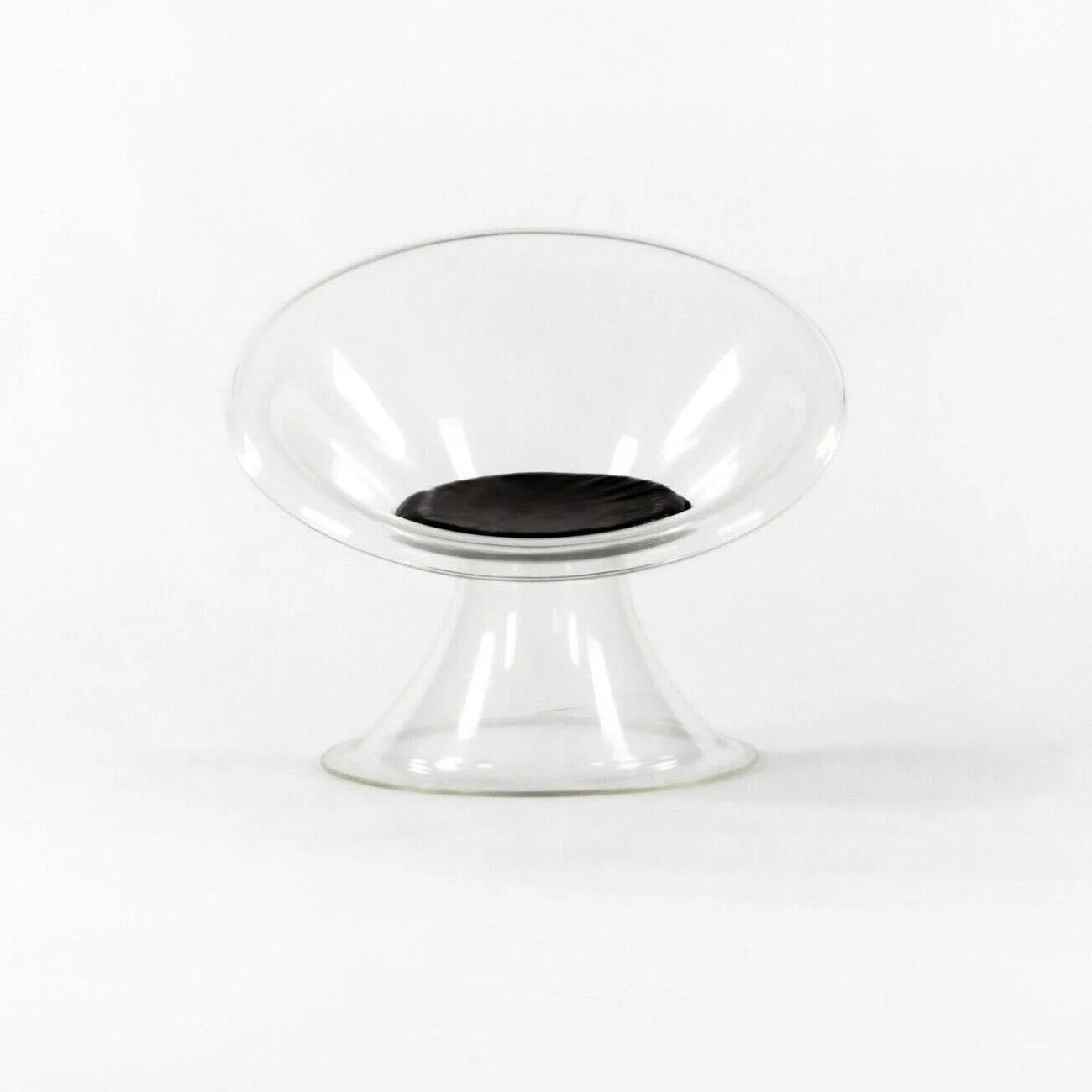
An impressive pair of 'Daffodil' Chairs for Laverne Originals 'Invisible Group' 1960
These incredibly rare chairs came from Long Island, very close to where the Laverne's used to live, on the Louis Comfort Tiffany estate. These have only ever belonged to the original owner and are looking for their forever home. They are very comfortable to lounge in and would be a great addition to a collector. Available to be purchased individually.
Rita Reif, who wrote about the design for The Times, gave the Invisible chairs a rave review in a 1958 article. She said, “I knew immediately what it was, how innovative: it was the first time we saw full-fledged modern design in acrylic. so light and airy. Dreamlike. And so amusing. Really the most important thing they (the Lavernes) ever did.” In Reif’s article, Erwine Laverne, a tall, imposing man with a strong ego, told Reif that “the most important element in rooms is people, not furniture.”
Condition:
Good Vintage condition. Wear is consistent with age and use. Chairs show beautifully, with minimal wear. Can come with upholstered seat cushions.
Measurements:
Height: 23.5 in. Width: 30.5 in. Depth: 26.5 in. Seat Height: 12.5 in.
About Erwine and Estelle Laverne:
In 1932 Erwine (1909-2003) and Estelle (1915-1997) Laverne both trained as painters at the Art Students League under Hans Hofmann. In 1934 they married and were inseparable. Soon, the Laverne's pooled their collective talent and focused on designing wallpaper, fabric and furniture. The couple formed Laverne Originals in 1938, which became a largely influential New York company that was driven by their precise and unique modern artistic style. In 1957 they released their “Invisible Group” of curvy translucent furniture designed to exist in a space as, Erwine believed, “an element of contrast to eliminate sameness.” The molded acrylic seats and lean, fluted bases were reminiscent of Saarinen’s 'Tulip' chair, and the names of some of these Laverne pieces, like 'Daffodil,' 'Lily' and 'Jonquil,' resonated with their inspiration. Unlike their competitors, they were hands-on in all phases of the work -- the designing, manufacturing, selling, promoting and advertising. Estelle, being the more poetic of the two, wrote the imaginative copy and named the designs
Erwine and Estelle lived most of their life on the Louis Comfort Tiffany estate, in Long Island, on over 100 acres of waterfront property. The Lavernes set up a haven for artists to live and create on the Tiffany Property. Many artists passed through the estate such as Alexander Calder. Others would go on to stay as artists in residence.
However, in 1952 the village issued the Lavernes a restraining order to cease and desist the manufacturing of wallpaper in a residential zone on the estate. The Laverne's argued that what they did was 'handcrafting', while manufacturing consists of a factory and heavy machinery. They endured years of legal battles, which took them away from their design business and passion. The court case went to the Supreme Court in the late 60's, where it was refused. After mounting legal costs and damage to their business, Estelle fell ill with multiple sclerosis and the couple ultimately died penniless in a nursing home.
Despite their sad ending, the Laverns left an unimaginable influence on the world of design. Their designs being coveted by dealers, aficionados and collectors from all over.
The Invisible Group by Erwine & Estelle Laverne
Vladimir Kagan ‘Omnibus’ Sectional Sofa with Lucite Legs, 1965

Neal Small coffee table, 1970


Set of 5 vintage Sphere dining chairs by Boris Tabacoff for Mobilier Modulaire Moderne, 1971


Table Lamp by Gabriella Crespi, Italy, 1970s

HILLEBRAND VINTAGE LUCITE WALL MIRROR WITH BACKLIGHT, GERMANY 1970'S


Jean Dudon, ‘Doubla’ Chair, 1971


Vladimir Kagan ‘Erica’ chaise, 1969


Jean Dudon, ‘Jide’ Chair, 1968


Pair of 1960s Stilux Milano 'Saturno' Wall Lamps

Smoked Lucite LOUNGE CHAIRS BY RAPHAEL RAFFEL, 1970S


Charles Hollis-Jones Attributed Lucite Chaise


Shiro Kuramata Flower Vases, 1989

Pace Collection Lucite Chrome Screw Leg and Glass Coffee Table by Leon Rosen


Rare Vladimir Kagan Walnut & Lucite Executive Desk. 1970s

Excellent Charles Hollis Jones King-Size Lucite Waterfall Bed Hollywood Regency, 1970s

Michel Dumas stools, France, 1970s
1970s Lucite Armchair by Boris Tabacoff
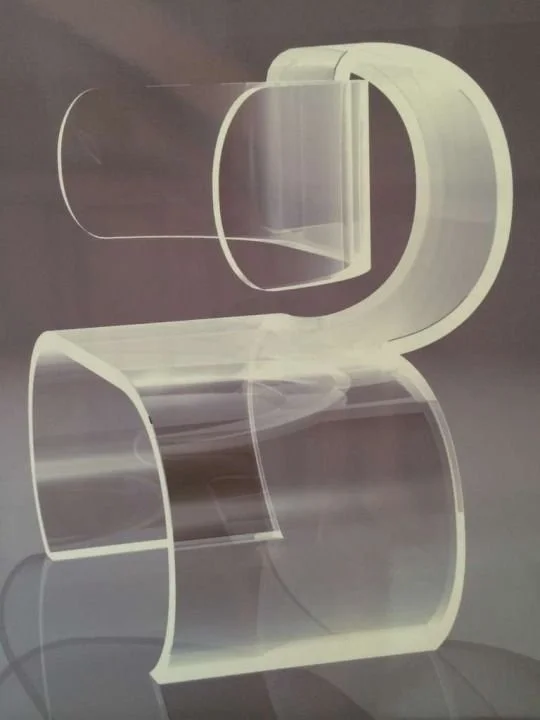
Jean Dudon PLexiglass Side chair, 1968
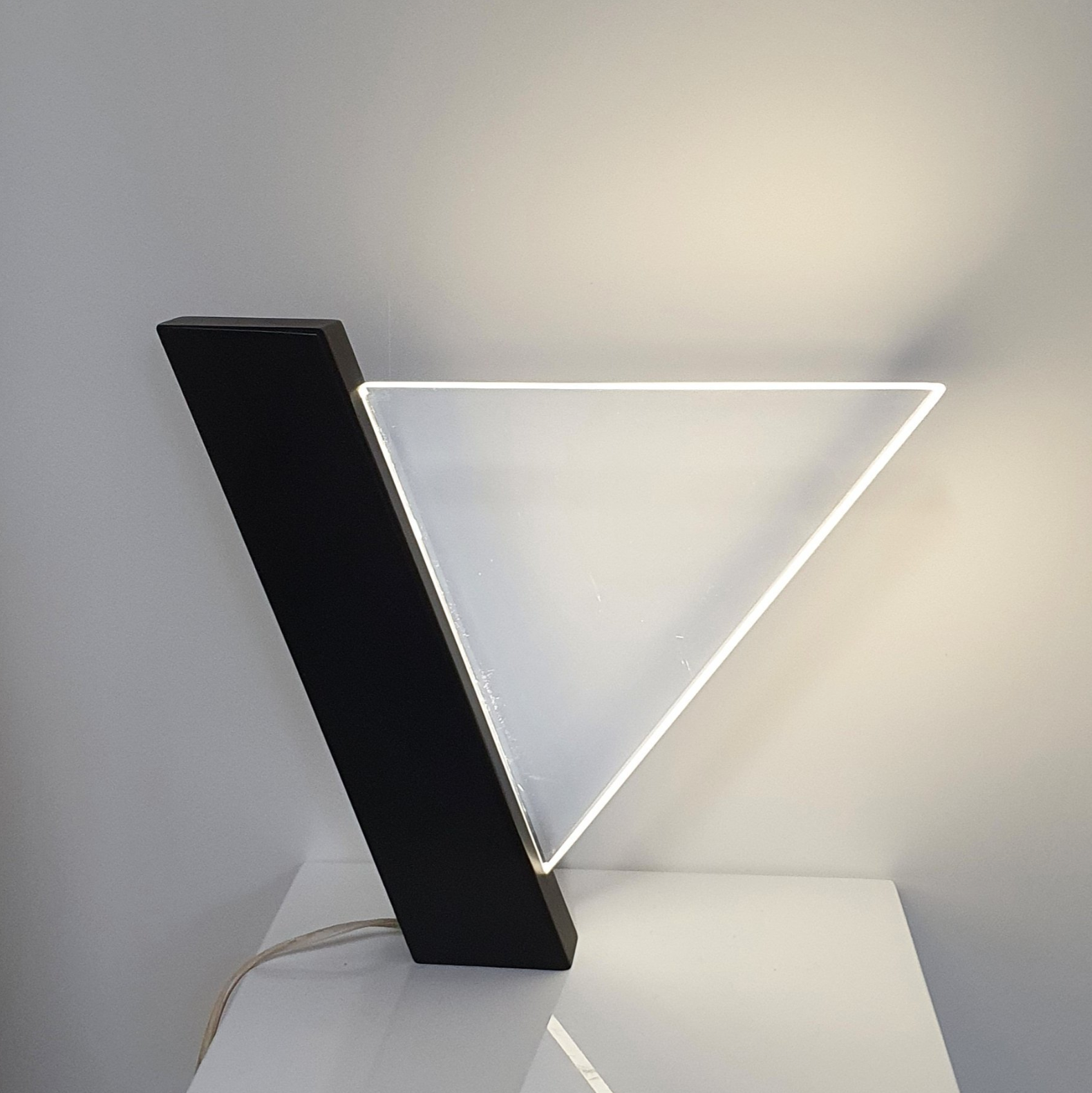
LUCITE INDOOR TABLE LAMP 'VITTORIO' BY PETER SCHREUDER GOEDHEIJT
Charles Hollis Jones Brass and Lucite ‘Metric’ King-Size Poster Bed, 1970s
DISCLAIMER: THE MILLIE VINTAGE DOES NOT OWN ANY RIGHTS TO THESE PHOTOS. PLEASE NOTE THAT ALL IMAGES AND COPYRIGHT BELONGS TO THE ORIGINAL OWNERS. NO COPYRIGHT INFRINGEMENT INTENDED.
MORE LIKE THIS




FOLLOW US ON INSTAGRAM
It’s no surprise that celebrities have the ability to acquire some of the most rare and incredible pieces of design. We are thrilled to see faces we look up to, enjoying vintage design as much as we do.